 Padel React
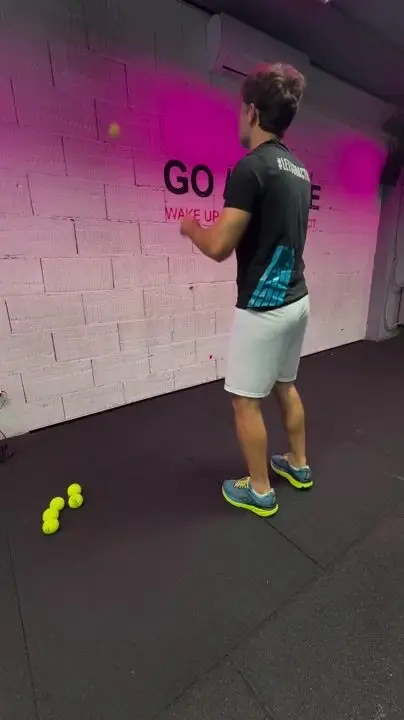 01
Single-Eye Wall Rebound
Cover one eye and throw against a wall — 25 throws per set.
New · Focus training
10 short, video-guided drills that make you think while your body moves. Built with a wall, a few balls and your phone. No padel needed.
3 min read
Not a medical device. For cognitive practice, self-reflection and performance tracking, not for diagnosing or treating any condition.
Attention that comes and go. ADHD isn't a lack of intelligence or effort. Research shows attention in ADHD is often less steady from moment to moment: responses become more variable, impulses are harder to hold back, and getting back on track after a slip takes more effort. Psychologists group these skills under executive functions.
The body matters. Physical activity is one of the most studied non-medication approaches for attention and executive function in ADHD. Reviews of trials suggest it can support these skills, and there is growing interest in movement that is also mentally demanding.
Our difference: we get you moving. Most focus training happens sitting at a screen. Those games are useful, but they stay limited to the screen. We take a different route: you train focus while you balance, catch, step and react. Your whole body is part of the exercise, which is closer to real life, where attention has to hold up through movement, noise and mistakes.
That is our method: thinking and moving at the same time.
Short demos. Pick one, grab a ball, try it.
Not a medical device. For cognitive practice, self-reflection and performance tracking, not for diagnosing or treating any condition.
01Cover one eye and throw against a wall — 25 throws per set.
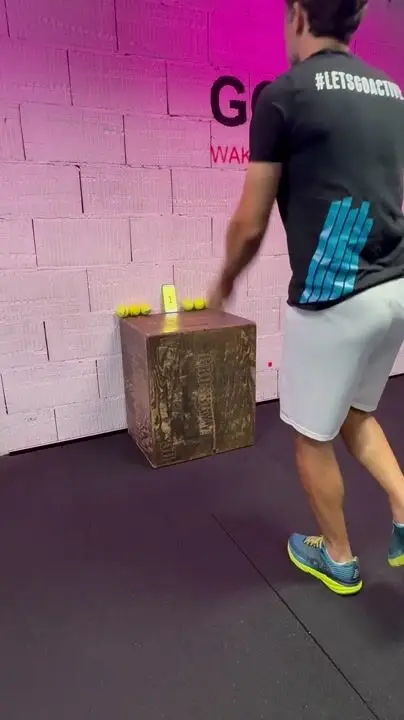 02
Balance on one foot, throw at the wall and call out on-screen colours and numbers.
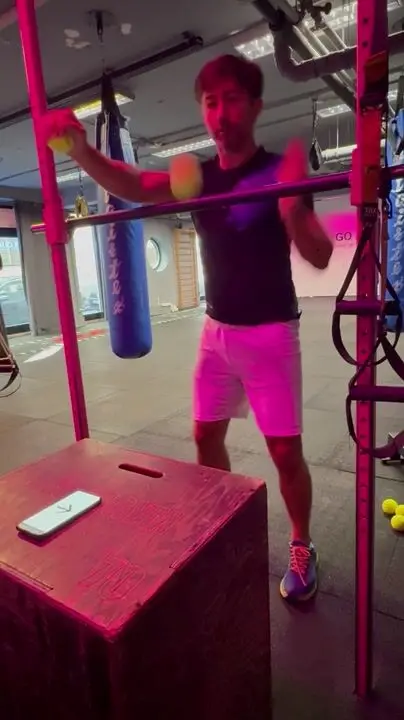 03
Drop-catch on the screen’s arrows. Red arrows reverse the action.
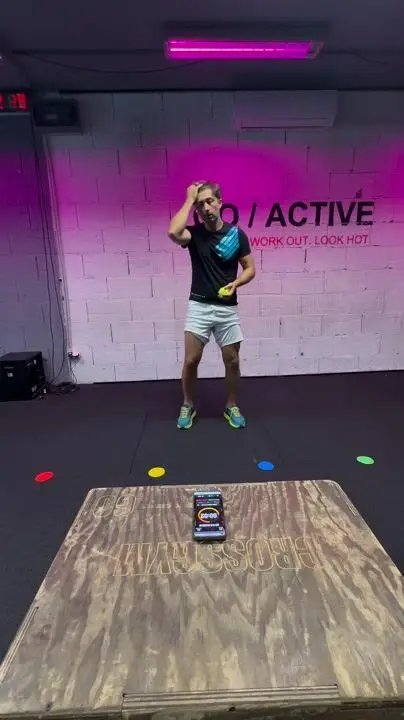 04
Follow the colour cue and catch the bounce with the opposite hand.
 05
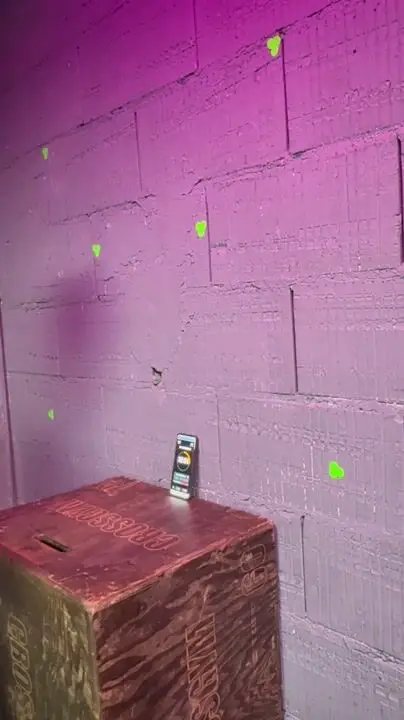
Tap the Post-it that matches each on-screen arrow — 40 taps per set.
 06
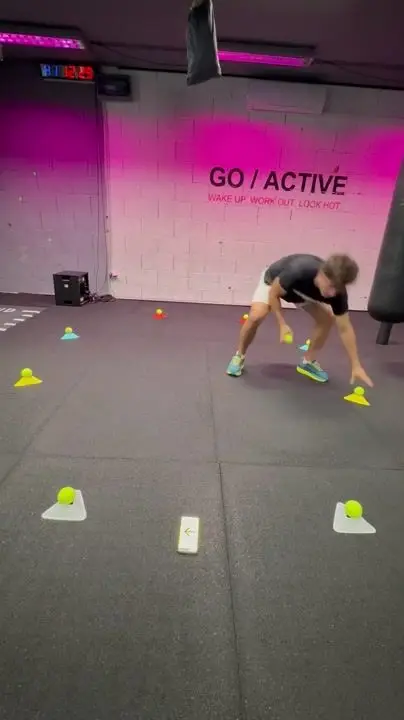
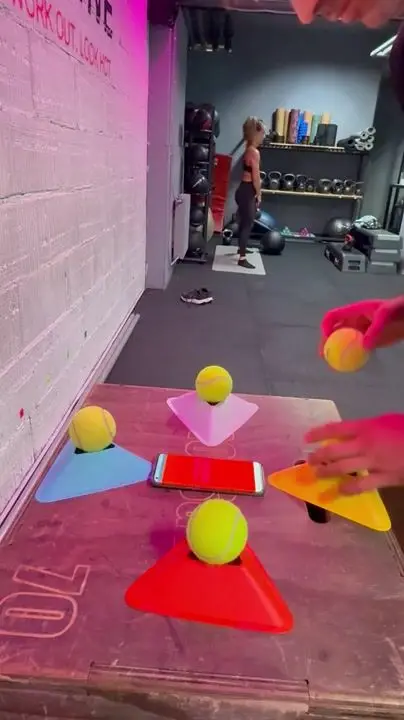
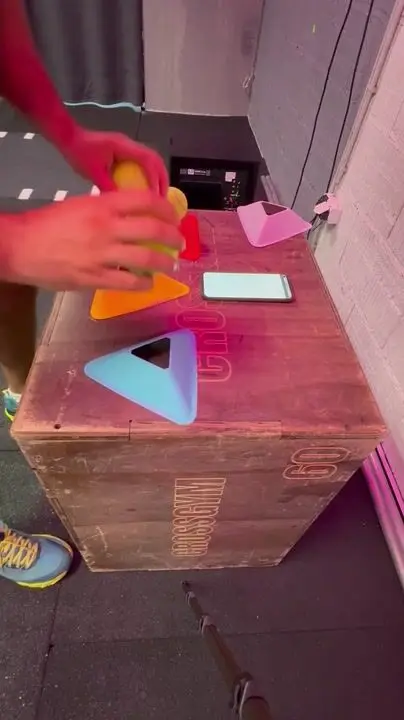
Swap balls on colour-coded cones — split-steps and fast recovery.
 07
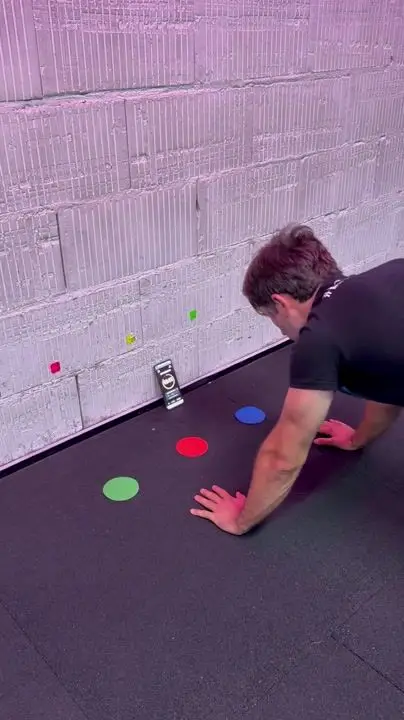
From a high plank, tap the matching Post-it or cone on each cue.
 08
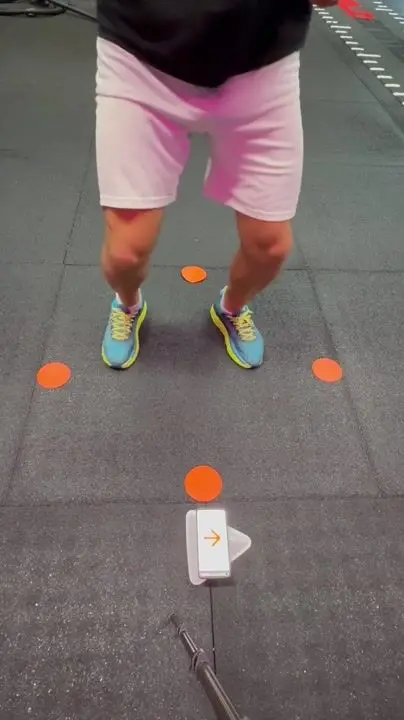
Split-step toward the green arrow — and the opposite way on red.
 09
Swap balls by the colour you see while the audio tries to mislead you.
 10
On each colour, grab the balls from the other two cones — and ignore the audio.
Any drill, any level.
Balls, cones, Post-its, a wall, your phone.
Low energy today? One drill is enough.

From the coach
I'm a mental performance coach and a Neuroscience & Psychology student at King's College London. I built these drills for padel players, and the skills they train (focus, impulse control, refocus) matter far beyond the court. I'm not a clinician: I design practice, not treatment.
No. It is practice for focus and executive skills, not a medical treatment, and it does not diagnose anything.
It's practice, not treatment, so it can sit next to whatever support you already have. Never stop or change treatment because of this program, and talk to your doctor if unsure.
No. All you need is a wall, a few balls, cones or Post-its and your phone.
Start with 10-15 minutes, 2-3 times a week. The drills are mentally demanding, so more than 3 hours a week is not recommended.
That's normal, and refocusing is one of the skills you practise. Pause, reset and restart. Short sessions are fine.
Younger users should train with adult supervision. If you have concerns about a child's attention, speak with a qualified professional.